[MIT GSW 2026 Special AI Lecture] The $1 Trillion AI-Biotech Revolution - Technology Foundations, Market Dynamics, and Why This Convergence Will Create the Next Unicorns
Abstract
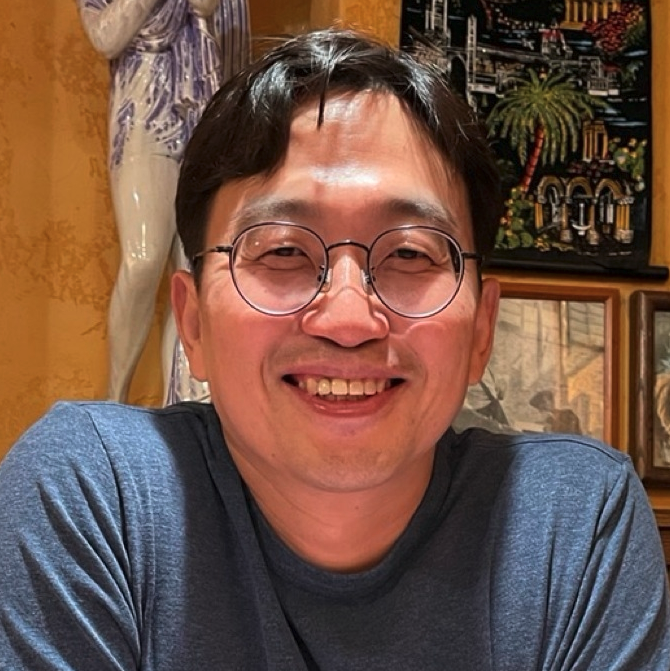
The convergence of Artificial Intelligence (AI) and biotechnology represents one of the most profound opportunities of our generation—not merely for wealth creation, but for fundamentally transforming human health and quality of life. This convergence promises to alleviate suffering from cancers, dementia, and countless degenerative diseases that have become humanity’s predominant health challenges as medical advances dramatically extended our lifespans throughout the 20th century. Yet most analyses of this space fail to capture the deeper technical and business dynamics that will determine which companies can actually deliver on these life-changing breakthroughs. Drawing from a unique vantage point that spans theoretical foundations (Stanford PhD in Convex Optimization), semiconductor and AI system development (12 years at Samsung, Amazon AI projects generating $200M+ revenue impact), executive leadership across multiple ecosystems (SK Hynix VP, Gauss Labs CTO with $55M funding), and current biotech innovation (Erudio Bio with Gates Foundation support), this talk provides the rare perspective of someone who has operated at the highest levels of both technological development and entrepreneurial execution—spanning the complete spectrum from theoretical foundations to hands-on market creation.
The AI-biotech revolution is fundamentally different from previous technology waves because it operates at the intersection of three exponential curves – the advent of large language models (LLMs) and generative AI (genAI), breakthrough advances in biochemical understanding, and unprecedented data availability. This convergence creates extraordinary opportunities for molecular simulation platforms that can predict drug interactions before expensive clinical trials, diagnostic systems that can detect cancer years before current methods, and personalized medicine approaches that treat individuals rather than statistical populations. The companies that will dominate this space are those that understand how to harness generative AI not just for text and images, but for protein sequences, molecular structures, and biological pathway optimization—ultimately translating computational breakthroughs into tangible improvements in human health and longevity.
What makes this moment particularly compelling is the emergence of what I call “cross-domain inevitabilities”—fundamental mathematical and physical principles that govern optimization across seemingly disparate fields. The same optimization techniques that revolutionized semiconductor manufacturing efficiency translate directly to protein folding energy landscapes and drug compound optimization. Information theory principles that drive AI model training apply similarly to understanding cellular signaling networks and metabolic pathway efficiency. The entrepreneurs who recognize these deep structural similarities, rather than treating AI and biotech as separate technical domains, will build companies that can actually bridge the gap between computational capability and biological reality. This requires not just theoretical knowledge, but having navigated the practical challenges of translating mathematical insights into engineered systems that work reliably at scale—always keeping the ultimate goal of human welfare at the center.
This talk will provide concrete frameworks for identifying which AI-biotech opportunities represent genuine breakthrough potential for improving quality of life versus incremental technical advances, how to evaluate not just technical moats but pathway to real-world health impact, and why the companies emerging from this convergence must balance commercial success with humanitarian mission. The massive opportunity belongs to those rare entrepreneurs who can operate simultaneously as technologists, business strategists, and advocates for human flourishing—combining deep technical understanding with the entrepreneurial instincts necessary to navigate an industry where breakthrough science, regulatory complexity, and the urgent need to alleviate human suffering intersect in unprecedented ways.